November is Diabetes Awareness Month, a perfect time to focus on your health. If you live with diabetes, protecting your feet is a daily priority. At Texas Foot & Ankle Specialists, PLLC, we help patients manage diabetic foot care every day.
Our board-certified podiatrists, Dr. William Arrington, Dr. Justin Wade, and Dr. Michael Birau, serve patients in Mesquite, TX, Forney, TX, and Kaufman, TX. We want to help you understand why daily checks are so critical.
Why must you check your feet if they do not hurt?
Many people believe that healthy feet always feel normal. However, diabetes can quietly damage the nerves in your lower extremities.
A guideline in Diabetes Care notes that up to 50% of diabetic peripheral neuropathy cases are completely asymptomatic. This means you might lose the ability to feel pain without realizing it.
Without pain as a warning, a small pebble or blister can quickly turn into a deep wound. We offer specialized testing in our offices to check your nerve health and keep you safe.
How do you perform a proper daily foot check?
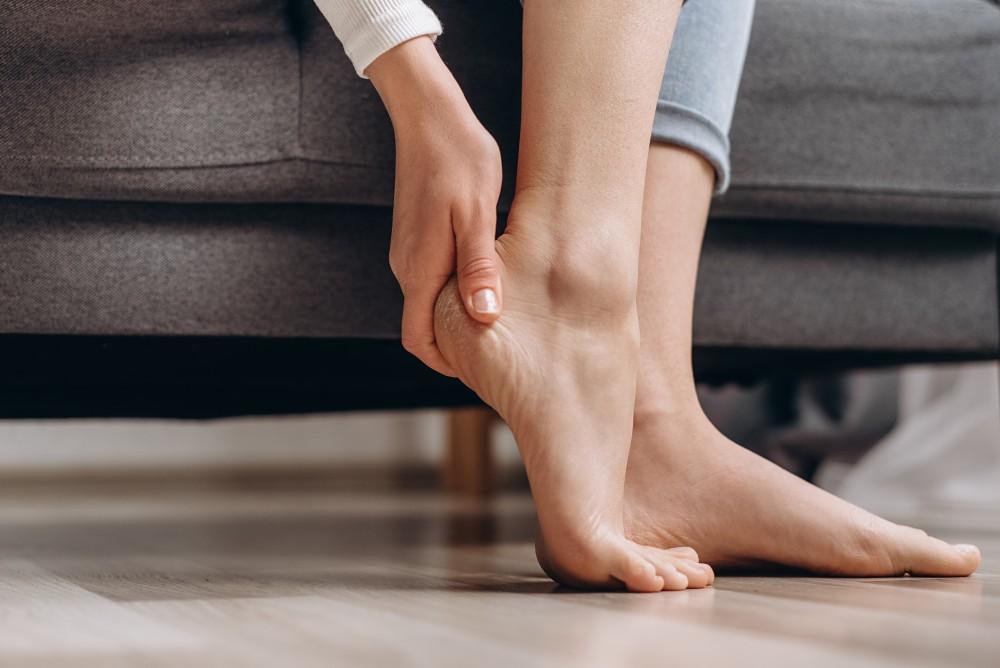
A scientific statement in Circulation advises checking your feet daily for cuts, blisters, redness, and swelling. Spotting these signs early prevents minor injuries from escalating.
To do this properly, follow these simple steps:
- Inspect every surface. Look closely at the tops, bottoms, and sides of your feet.
- Use adaptive tools. A study in Diabetes Care notes that about 12% of adults with diabetes have vision impairment. If you cannot bend easily or see clearly, place a shatterproof mirror on the floor or use a smartphone camera.
- Wash and dry carefully. The Centers for Disease Control and Prevention recommends washing your feet daily in warm water. Dry them thoroughly, especially between your toes.
- Moisturize with caution. Apply lotion to dry areas like your heels. Never put lotion between your toes, as trapped moisture can cause fungal infections.
What should you do if you find a problem?
If you spot a cut, blister, or callus, do not try to treat it at home. The American Diabetes Association explicitly warns against self-treating calluses or an ingrown toenail.
Attempting "bathroom surgery" with sharp tools can easily introduce dangerous bacteria. Because diabetic feet heal more slowly, a minor cut can quickly become a serious foot ulcer.
Our team provides safe, sterile care for all diabetic foot concerns. We also offer custom diabetic shoes to protect your feet from friction and pressure.
This Diabetes Awareness Month, take the first step toward protecting your limbs. If you notice any changes during your daily checks, do not wait. Please contact our team today to schedule a comprehensive foot exam at our Mesquite, Forney, or Kaufman offices.